Permeable Asphalt Driveways
By Derek Garvey · Reviewed July 2026 · National planning ranges, not quotes · Questions or corrections: admin@pavingcalc.com
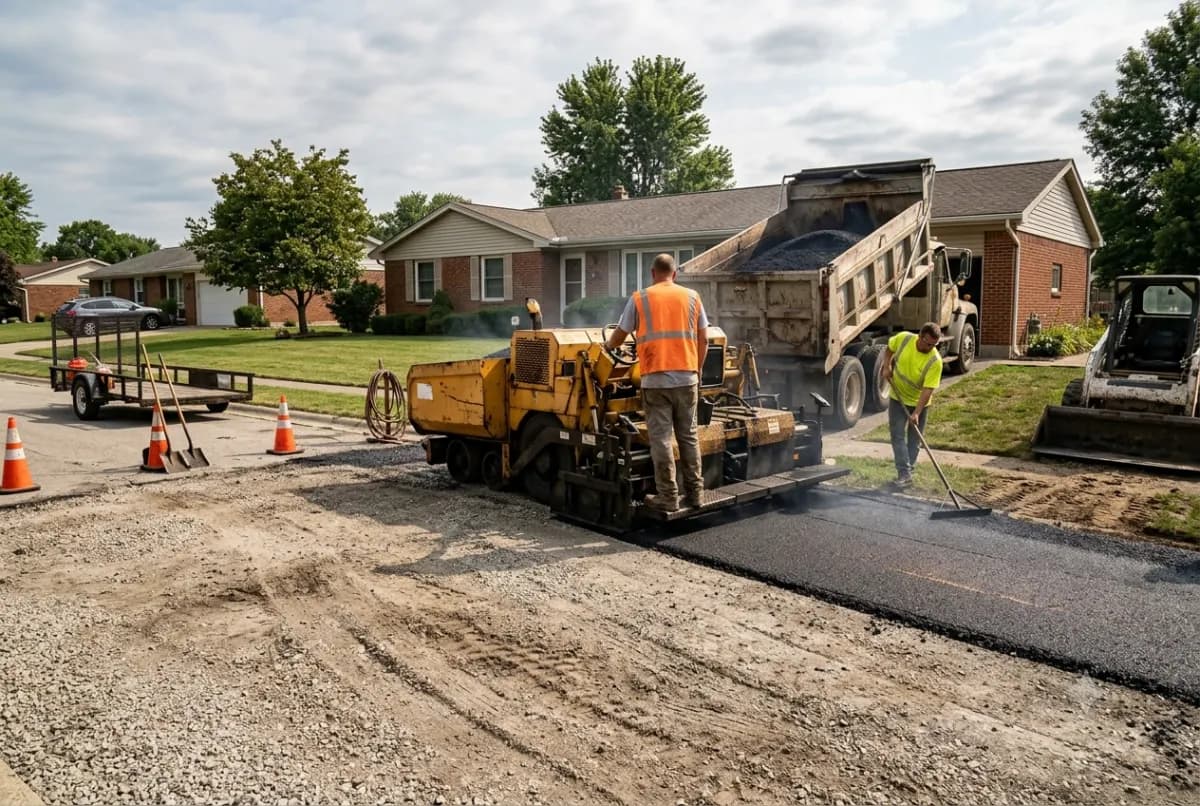
A porous asphalt driveway includes much more than the top layer. Water passes through the open-graded asphalt into a clean-stone reservoir below. From there, it either soaks into suitable soil or leaves through a designed underdrain and overflow.
That makes it a stormwater system as well as a driveway. Soil, groundwater, slope, runoff, maintenance, and local rules all affect whether it will work. A standard driveway calculator cannot price or design those parts.
How the system works
A typical section may contain the following parts:
| Part | What it does |
|---|---|
| Porous asphalt surface | Interconnected voids let water pass through. |
| Choker or bedding layer | Supports the surface while maintaining permeability. |
| Open-graded stone reservoir | Stores runoff temporarily and distributes loads. |
| Separation layer or geotextile | Used selectively when the design calls for it. |
| Prepared subgrade | Preserves the intended infiltration and supports the pavement. |
| Underdrain or outlet | Releases water when full infiltration is unsuitable. |
| Overflow | Handles storms larger than the design event or reduced infiltration. |
The surface and subsurface must be designed together. Placing porous asphalt over a dense conventional base prevents the intended infiltration and storage.
Potential benefits
EPA identifies permeable pavement as green infrastructure that can capture and store rainfall where it lands. Potential benefits include:
- reduced surface runoff.
- lower peak discharge in suitable designs.
- filtration through the pavement and aggregate system.
- less standing surface water.
- possible reduction in separate stormwater infrastructure.
- site-design flexibility where local rules credit green infrastructure.
Benefits depend on design and maintenance. They should not be promised without calculations and local approval.
Site conditions to evaluate
Soil infiltration
The designer should test infiltration and identify soil layers, compaction, fill, and seasonal moisture. Slow soils may require an underdrain or may make full infiltration unsuitable. Very fast infiltration may trigger groundwater-quality concerns depending on land use.
Groundwater and bedrock
FHWA porous-pavement guidance calls for separation from seasonal high groundwater or bedrock; the cited technical brief discusses a two-foot separation as a design consideration. Local criteria may require more. A qualified designer must verify the current rule and site conditions.
Slope
FHWA and EPA guidance generally favor flatter sites and describe surface slopes below about 5% for porous pavements. Steeper slopes can cause water to move through the reservoir instead of storing uniformly. Internal check dams or other designs may be necessary, or the site may be unsuitable.
Run-on and sediment
Dirty runoff from bare soil, gravel, landscaping, or construction can clog the surface. The design should limit uncontrolled run-on and stabilize contributing areas before the pavement opens.
Land use and spills
Consider fuel, chemical, salt, and contaminated-runoff risk. Some sites need pretreatment or should not infiltrate runoff. Residential use is not automatically risk-free; vehicle leaks still matter.
Setbacks and foundations
Infiltration near basements, retaining walls, wells, septic systems, slopes, or property lines may be restricted or unwise. Follow local stormwater and health rules.
Cost planning
Current consumer sources sometimes publish porous-asphalt installation ranges around $7-$15 per square foot, but a credible project budget must include more than surface paving:
- site and infiltration testing.
- survey and drainage design.
- excavation and clean-stone reservoir.
- underdrain, observation well, and overflow when required.
- erosion and sediment controls.
- specialized asphalt mixture and experienced contractor.
- inspection and testing.
- vacuum maintenance.
- restoration and permits.
Local material availability can change price sharply. Compare the full life-cycle cost of the pavement and stormwater system with the surface’s square-foot rate.
Design and bid checklist
Ask the designer or contractor to document:
- design storm and contributing drainage area.
- measured infiltration rate and test method.
- seasonal groundwater and bedrock elevation.
- surface slope and bottom-reservoir elevations.
- reservoir stone type, void ratio, and depth.
- full-infiltration, partial-infiltration, or lined design.
- underdrain size, elevation, and outlet.
- overflow route.
- surface asphalt mixture and compacted thickness.
- edge restraint and transition details.
- construction sediment-protection plan.
- inspection and maintenance plan.
- winter maintenance and prohibited materials.
- local approval and as-built documentation.
If a proposal contains only “porous asphalt, X inches,” it does not define a stormwater system.
Construction risks
Permeable pavement is vulnerable to clogging before it is even opened. Protect the excavated area and stone reservoir from muddy construction traffic, sediment-laden runoff, soil stockpiles, and conventional dense-graded material.
The sequence should generally keep contributing soil stabilized and prevent the porous surface from serving as the project’s sediment basin. The contractor should use equipment and compaction methods appropriate for the specified open-graded mixture.
Maintenance
EPA guidance emphasizes maintenance to preserve infiltration. A practical plan includes:
- routine visual inspection for sediment and ponding.
- regenerative-air or vacuum sweeping at the frequency specified by the designer.
- prompt removal of soil, mulch, and leaves.
- prevention of adjacent erosion.
- cleaning of observation ports, inlets, and outlets.
- repair with compatible porous materials.
- periodic infiltration testing when required.
- recordkeeping.
Do not sealcoat porous asphalt. Conventional sealcoat fills the voids that make the surface permeable. Do not use sand for winter traction unless the system designer explicitly allows it; sand can clog pores. Snowplow settings should avoid surface damage.
Signs of performance problems
- water remains on the surface during ordinary rainfall.
- runoff bypasses the intended system.
- sediment accumulates along edges.
- observation wells remain full longer than the design allows.
- the outlet is blocked or eroded.
- the surface ravels or deforms.
- conventional patch or sealcoat has blocked infiltration.
- surrounding landscaping sends soil onto the pavement.
Surface cleaning may restore infiltration when clogging is shallow. Structural or subsurface problems require investigation; pressure washing debris deeper into the system can make matters worse.
Porous asphalt versus recycled asphalt millings
They are not the same.
| Material | What the term means |
|---|---|
| Porous asphalt | A plant-produced mix with connected voids, installed as part of a designed stormwater system. |
| Reclaimed asphalt pavement (RAP) | Removed asphalt that can be processed and used in a new asphalt mix under controlled specifications. |
| Loose asphalt millings | Recycled pieces spread as a surface. They do not automatically provide a designed reservoir, outlet, or verified stormwater performance. |
Use exact terms so pricing and environmental claims remain honest.
Sources and methodology
- EPA: Soak Up the Rain, Permeable Pavement
- EPA: Types of green infrastructure
- EPA: Permeable Pavements BMP fact sheet
- FHWA: TechBrief, Porous Asphalt Pavements with Stone Reservoirs
- EPA: Experimental permeable pavement parking lot research
- HomeGuide: Asphalt driveway cost
Editorial note: Permeable pavement criteria vary by jurisdiction and site. Use a qualified stormwater/pavement designer and current local requirements.
Frequently asked questions
- Does porous asphalt work in cold climates?
- It can. EPA and FHWA materials discuss successful use in cold regions, but design must address freeze-thaw, snow management, salt, subgrade, drainage, and maintenance. Local experience matters.
- Can it handle cars and light trucks?
- Yes, when structurally designed for the expected loads. The reservoir layer serves stormwater and structural functions. Heavy or frequent truck use requires explicit design.
- Does it eliminate all runoff?
- No. Systems need overflow for large storms, frozen conditions, slow infiltration, or reduced performance. Design claims should be based on calculations.
- Can I sealcoat it?
- No. Conventional sealcoat blocks the connected pores. Use maintenance and repair methods approved for porous pavement.