New Asphalt Driveway Care
By Derek Garvey · Reviewed July 2026 · National planning ranges, not quotes · Questions or corrections: admin@pavingcalc.com
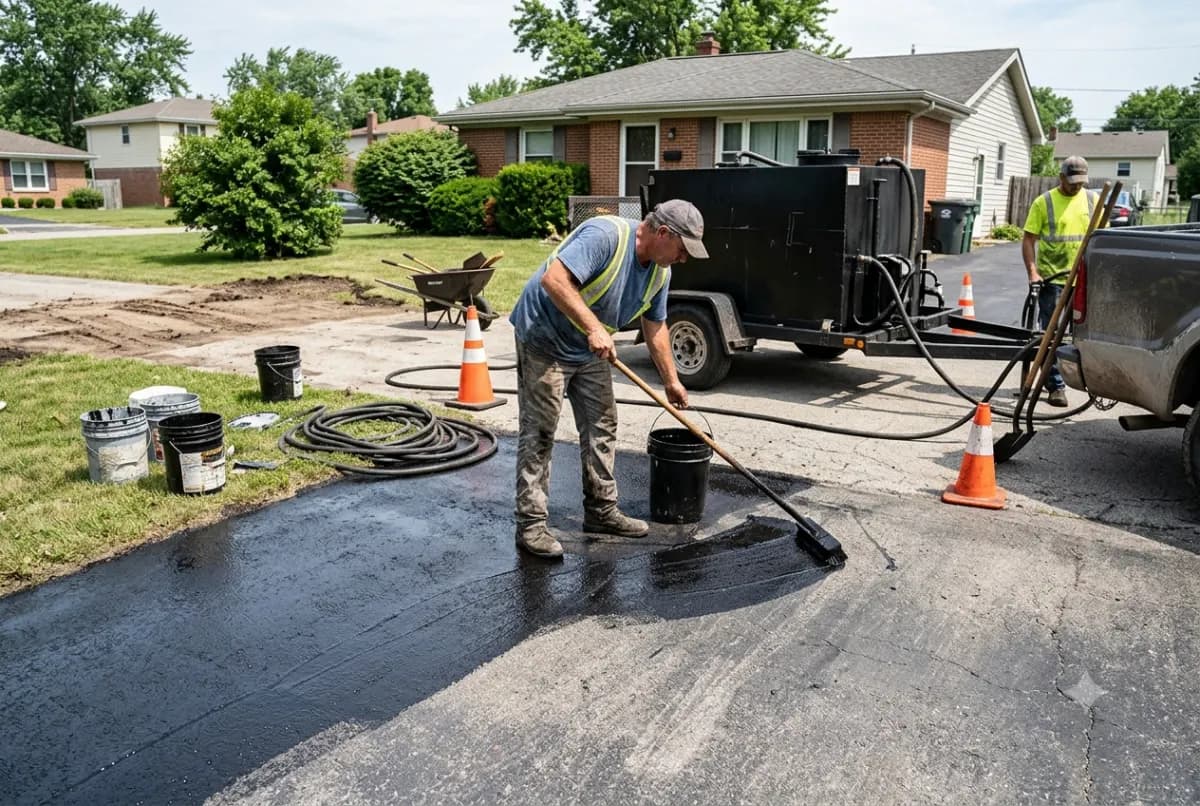
The contractor's written opening time should take priority over generic online advice. Asphalt becomes firm as it cools and is compacted, then keeps stiffening as the binder ages. It does not cure the way concrete does, and the wait depends on the mix, weather, pavement thickness, shade, and vehicle weight.
For the first part of its service life, be gentle with tight turns, heavy point loads, fuel spills, and unsupported edges. Skip the immediate sealcoat, too. The Asphalt Institute says a properly built low-volume pavement should not normally need one for roughly two to five years, depending on climate and condition.
Planning a new driveway? Start with the PavingCalc asphalt calculator, then follow your contractor's written opening and care instructions.
Before the crew leaves
Get these instructions in writing:
- when foot traffic is allowed.
- when passenger vehicles are allowed.
- when delivery trucks, RVs, trailers, and dumpsters are allowed.
- where not to park.
- how long to avoid sharp turning.
- who completes edge backfill or shoulder support.
- what to do if rainwater ponds.
- what appearance is normal.
- how to report a concern.
- warranty start date and exclusions.
Do not rely on a universal “24 hours” internet rule. A contractor who knows the mixture, pavement temperature, site, and expected loads is in a better position to set the opening time.
First days: protect the surface
Keep vehicles off until authorized
Barricade the entrance clearly. Coordinate mail, deliveries, trash pickup, home-care visits, and contractor access in advance. Heavy service vehicles may need a longer restriction than passenger cars.
Avoid stationary steering
Turning the steering wheel while a vehicle is stopped can scuff or tear a young surface, especially in hot weather. Keep the vehicle moving slowly while steering and vary the parking path.
Spread concentrated loads
Motorcycle kickstands, trailer jacks, ladders, dumpsters, and narrow equipment feet concentrate weight. Use broad, appropriate load-spreading pads only after the contractor approves placement. Do not use materials that can stick to or discolor the surface.
Protect edges
New pavement edges are vulnerable when not supported by curbs or compacted shoulder material. Keep tires away from the edge, especially where there is a drop-off. Complete specified backfill promptly without blocking drainage.
First weeks: use it gently
- Change parking positions rather than using the exact wheel tracks every day.
- Avoid repeated tight turns and hard braking.
- Keep heavy trucks off unless the pavement was designed for them and the contractor approves access.
- Place drip protection under leaking vehicles with a compatible non-staining barrier.
- Do not leave sharp objects or hot equipment on the surface.
- Keep roof drains and irrigation from saturating pavement edges.
Hot weather can make asphalt more susceptible to scuffing and indentation. Marks are more likely under heavy stationary loads and tight turning. Ask the installer which early marks are cosmetic and which need repair.
Drainage check after the first rain
Observe the driveway during or just after steady rain. Photograph:
- water moving toward the garage or foundation.
- standing water that remains after surrounding surfaces drain.
- runoff crossing walkways or freezing-prone areas.
- erosion at unsupported edges.
- discharge onto neighboring property.
- water entering cracks or transitions.
Small temporary surface wetness is different from a persistent depression. Report concerns promptly under the contract instead of trying to drill, cut, heat, or coat the surface yourself.
What normal new asphalt may look like
A new driveway is built from aggregate and binder, not poured as a perfectly uniform cosmetic sheet. Depending on the mix and handwork, you may see:
- minor texture variation.
- roller or paver patterns.
- handwork at edges and tight areas.
- construction joints.
- slight color variation as the surface ages.
- isolated tire scuffs during hot conditions.
Normal variation has limits. Open seams, loose edges, deep depressions, widespread segregation, unsafe lips, drainage reversal, or movement should be documented and discussed with the contractor.
Spills and cleaning
Fuel and petroleum solvents can soften asphalt binder. Address leaks quickly and follow installer or product-manufacturer guidance. Do not use harsh solvents, open flame, or aggressive pressure washing on a young surface.
For soil and leaves, start with dry sweeping and gentle rinsing once water use is approved. Keep mulch, soil, and plant growth away from edges and cracks.
Snow and ice care
Confirm winter instructions with the contractor and local product guidance.
- Use snowplow shoes or settings that avoid gouging raised edges and transitions.
- Mark curbs, drains, and pavement limits before snow.
- Avoid metal tools that can chip edges or dig into the surface.
- Remove snow before repeated traffic packs it into ice.
- Use deicing products only after confirming compatibility and runoff impacts.
Mechanical damage from a plow is not a materials defect. Show snow contractors the pavement limits and vulnerable transitions.
Crack and edge inspection
Inspect each spring and fall and after severe weather. Look for:
- cracks that are widening or moving.
- vegetation at edges.
- shoulder erosion.
- water ponding or entering joints.
- settlement around utility covers.
- damage from heavy or tracked equipment.
- fuel-softened areas.
Photograph changes with a ruler or coin for scale. Early documentation helps distinguish isolated damage from a repeating structural or drainage issue.
Sealcoating timing
Do not sealcoat simply because the asphalt has turned from deep black to gray. Asphalt Institute says a well-designed and built driveway or low-volume parking lot should not normally need a sealcoat for about two to five years. Evaluate it when the surface becomes dry or brittle, small voids and fine cracks develop, or minor raveling begins.
When sealing is justified:
- repair suitable cracks and failed areas first.
- choose a locally permitted product.
- prefer an appropriate asphalt-emulsion product rather than coal-tar sealcoat.
- follow the manufacturer's preparation, coverage, temperature, and drying instructions.
- avoid excessive thickness or unnecessary repeated applications.
Sealcoat is preventive surface maintenance, not structural repair.
Maintenance record
Keep a simple file with:
- signed contract and pavement section.
- contractor and asphalt-plant information if provided.
- construction date and weather.
- photos before, during, and after work.
- written opening and care instructions.
- drainage observations.
- repair and sealcoat dates/products.
- warranty communications.
This record improves future diagnosis and makes maintenance claims more credible.
Sources and methodology
- Asphalt Institute: Engineering FAQs
- Illinois Asphalt Pavement Association: Driveways
- Asphalt Magazine: What makes a good asphalt driveway?
- USGS: Coal-tar-based pavement sealcoat, PAHs, and the environment
Editorial note: Opening times and maintenance methods are product- and site-specific. The installer and product manufacturer control over generic timing advice.
Frequently asked questions
- When can I drive on new asphalt?
- Use the contractor's written instruction. It depends on pavement temperature, mixture, thickness, weather, and vehicle type. Passenger-car access and heavy-truck access may have different dates.
- Does asphalt take months to cure?
- Asphalt cools and becomes traffic-bearing quickly compared with concrete, then continues to stiffen through aging and oxidation. "Cure" is often used casually, but it should not replace project-specific opening instructions.
- Why are tire marks appearing?
- Young or hot asphalt can scuff under stationary steering or heavy loads. Avoid tight stopped turns. Send photos to the installer if marks are deep, widespread, or associated with movement.
- Should I water a new asphalt driveway?
- Do not use water as a substitute for written opening guidance. Ask the contractor before applying water, and never create edge saturation or runoff problems.